
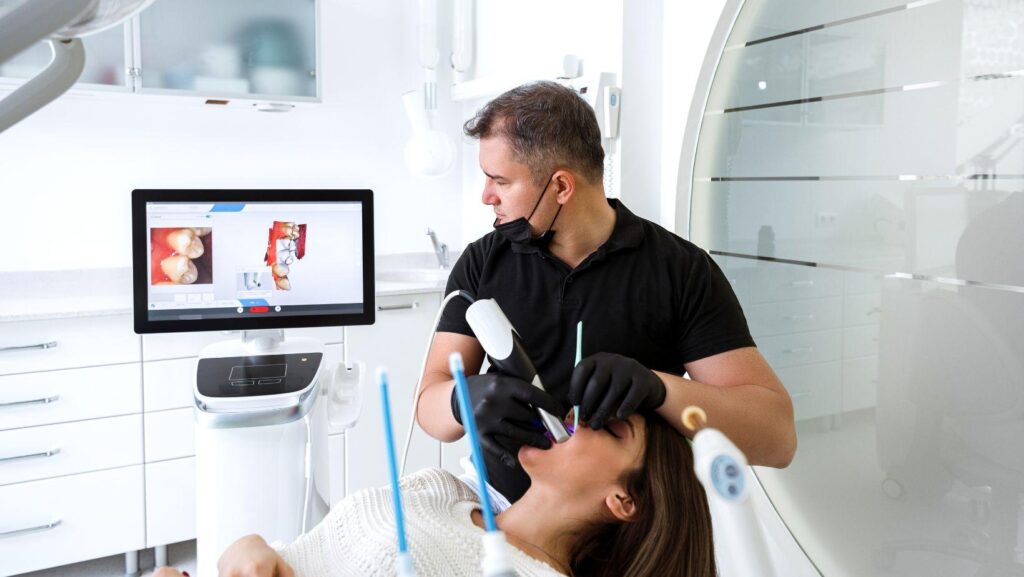
If you need a crown but dread the temporary and a second appointment, CEREC technology changes that. CEREC lets your dentist scan, design, mill, and place a permanent ceramic crown in a single visit, so you can skip the temporary and skip the return trip.
You'll see how digital impressions replace that messy putty, and how chairside CAD/CAM milling produces a durable, color-matched ceramic crown while you wait. What does that mean for fit, appearance, and how long your crown lasts? We'll get into it. There's also some practical info about appointment length, material choices, and whether same day crowns in Anna, Texas are right for you.
How Digital Impressions Transform Dental Restorations
Digital impressions toss out the putty and use precise intraoral scans instead. That speeds up design and milling, so you don’t need temporaries.
You get better-fitting crowns and fewer adjustments. Most of the work wraps up in a single appointment.
Precision and Comfort of Digital Scanning
Digital scanners capture hundreds of thousands of data points across your tooth’s surfaces and margins. That produces a 3D model with crazy accuracy—down to microns.
This accuracy means a better crown fit and fewer adjustments when your dentist seats the restoration. Scanning ditches the tray-based alginate or silicone impressions, so you don’t have to deal with gagging or long-setting goo.
Scans let the dentist zoom, rotate, and measure digitally, spotting margin issues or bite problems before milling. If there’s a problem with the digital file, your dentist can check it right away, and rescanning a spot takes seconds.
That’s a lot less invasive than redoing the whole impression. Honestly, it’s a relief.
Streamlined Workflow Compared to Traditional Methods
With an intraoral scanner and CEREC CAD/CAM, you go from prep to design to milling in a smooth, continuous flow. The dentist designs the crown on-screen, mills it from a ceramic block, and finishes shade and polish right there—no shipping impressions to a lab.
This in-office loop slashes lab turnaround time, which usually takes days or weeks. It also cuts out errors from pouring impressions, shipping, and lab reinterpretation, since the same digital file guides everything.
Digital workflows hook right up with milling units and furnaces, so you get same-day sintering and glazing. You walk out with your final crown, not a temporary one you’ll just replace later.
Impact on Patient Experience
You spend less time in the dental chair and need fewer appointments when your dentist uses the digital workflow. Instead of coming back for a second visit to swap out a temporary, you leave with a permanent crown that fits and feels right.
Because your dentist checks fit and bite digitally before making the crown, you’re less likely to need post-placement tweaks or feel sensitivity. Cutting out impression discomfort and shortening the whole process just makes the experience better.
Digital records make future treatments easier, too. Your dentist stores the 3D files, so if you ever need a new crown, you won’t have to do new scans or old-school impressions again.
Single-Visit Dentistry: Treatment in One Appointment
You can get a permanent ceramic restoration the same day through digital scanning, in-office design, and milling. That means fewer appointments and no waiting around for lab-made crowns.
Chairside CAD/CAM Fabrication
Your dentist scans your prepared tooth with a digital scanner, grabbing precise 3D measurements in just a few minutes. No more messy putty impressions—just a quick scan for the exact geometry your crown needs.
A CAD program uses that scan to design your new crown while you sit there. You can even check out shade and shape tweaks on the screen before they start milling.
The on-site milling unit carves your crown from a ceramic block in about 10–30 minutes, depending on how complex it is. After finishing and glazing, your dentist fits and bonds it that same visit. No extra trips.
Eliminating the Need for Temporary Crowns
Since the crown’s designed and milled right there, you leave with a permanent restoration instead of a temporary. That means you skip the usual hassles—poor fit, sensitivity, or worrying about the temporary popping off.
Your dentist bonds the ceramic crown using adhesive protocols that match the material, which helps prevent leakage and boosts longevity. No need for a separate cementation visit or babying a temporary for weeks.
Longevity and Quality of Same-Day Crowns
Same-day crowns use strong ceramics and precise digital fitting, giving you a restoration that holds up and looks good. You get a permanent ceramic crown in one visit—no temporary, no repeat appointments.
Durable Materials Used in CEREC Restorations
CEREC crowns usually use monolithic ceramics like lithium disilicate and zirconia. Lithium disilicate looks glassy and natural, and it’s tough enough for most teeth.
Zirconia’s even stronger and works well for molars or folks who grind their teeth. Dental ceramics for CEREC are milled from CAD/CAM blocks with controlled density, so you get fewer internal flaws that could cause early failure.
Manufacturers rate these materials by flexural strength and fracture toughness. Lithium disilicate typically lands around 360–400 MPa, while some full-contour zirconias go over 1000 MPa. Of course, how your dentist bonds and adjusts the crown also affects how long it lasts.
Fit Accuracy and Aesthetics
The digital scan captures precise margins and tooth shape, and the in-office milling produces a crown that closely matches the design. That reduces the risk of leakage and decay compared to poorly fitting temporaries.
A good marginal fit usually measures within 50–120 microns for well-made CAD/CAM crowns. Aesthetics depend on the material’s translucency and how it’s finished.
Lithium disilicate does a great job mimicking enamel, so it’s a top pick for visible teeth. Zirconia can be layered or stained for better color but can look a bit less translucent if it’s monolithic.
Your dentist will tweak the bite, polish the surface, and add finishing touches to get the best look and function possible.
Practical Considerations for Patients and Providers
CEREC lets you get a permanent ceramic restoration in one visit, but it’s not for everyone. You’ll want to weigh your own needs, the tooth’s condition, and what your dentist can do in-office.
Cost, material choices, and the chairside workflow all play a role in whether skipping a temporary crown is your best bet.
Ideal Candidates for CEREC Technology
You’re a good candidate for CEREC if you need a single crown, onlay, or veneer and your tooth still has enough structure. If your case is straightforward and doesn’t need a lot of bite adjustment, you’ll likely benefit most.
If you hate impressions and don’t want to come back for a second visit, CEREC’s a solid choice. But if you grind your teeth a lot, you might need a nightguard, since some ceramics don’t love heavy, constant grinding.
Good oral hygiene and healthy gums help ensure accurate scans and long-term success. Insurance coverage can vary, so check your benefits for same-day crowns and ask about material choices before you start.
It’s also worth asking about the office’s milling and shading capabilities. If you care a lot about aesthetics or have a tricky shade to match, that can affect your results.
Limitations and Situations Requiring Traditional Crowns
CEREC might not work well if your tooth needs a complex build-up or has deep subgingival margins. If you’re looking at a full-arch rehab, you’ll probably need something more traditional.
Dentists often prefer lab-fabricated restorations for cases that need several units splinted together or require special alloys for strength. If you’re dealing with complex occlusal issues, the lab route usually makes more sense.
Optical scans can struggle when margins are deep or if there’s active gum disease. In those cases, traditional impressions just feel safer.
Some advanced ceramic materials and layered esthetic techniques from dental labs can offer better translucency or strength, especially up front where looks really matter.
It’s smart to ask your provider about backup plans. Some offices still make a temporary or send an impression out to the lab if the milling machine acts up or the crown just isn’t fitting right.